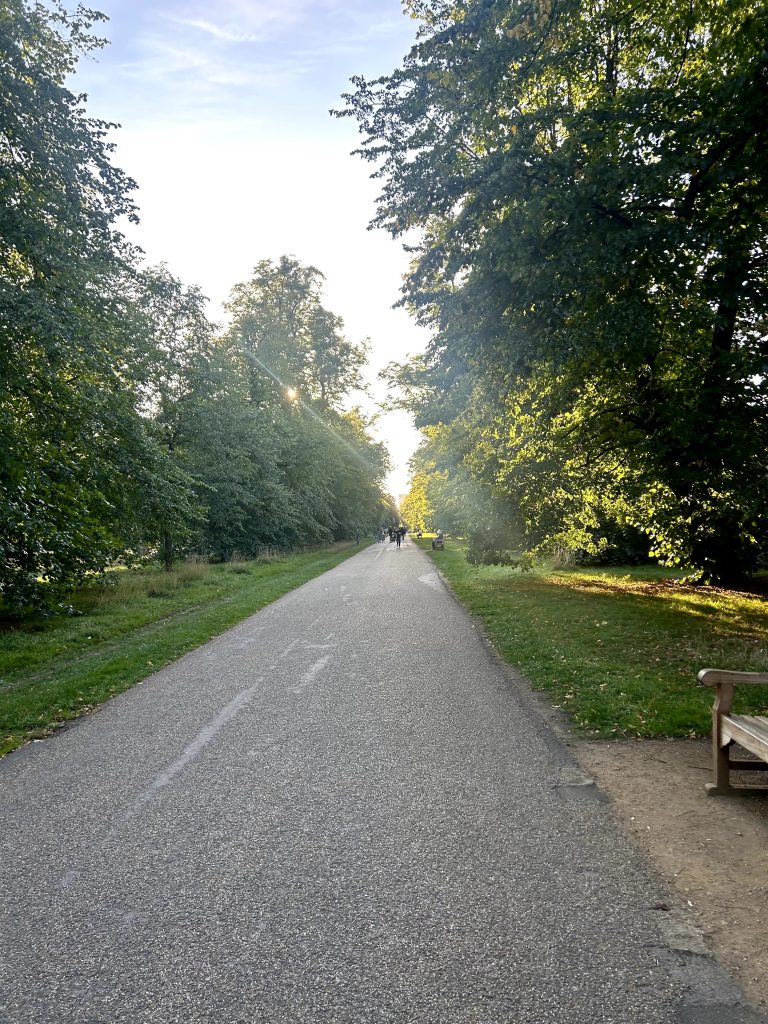
A path in Kensington Garden between Lancaster Gate and Porchester Gate, the path faces the park and backs onto the street.
Week 1 24/9-25/9
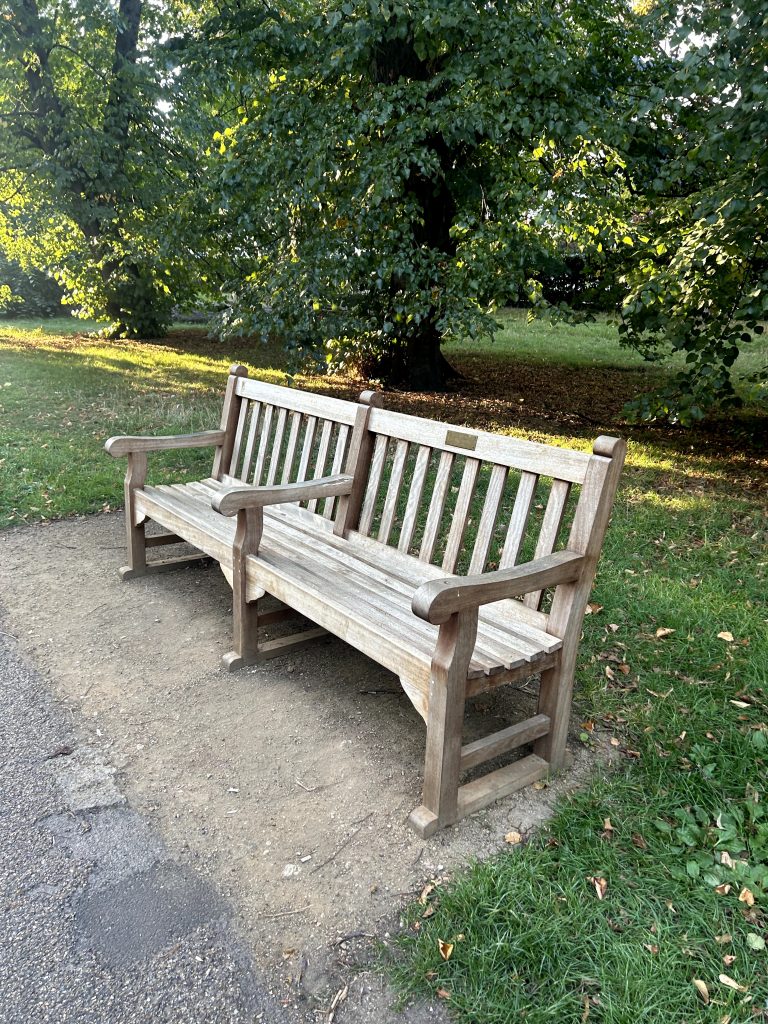
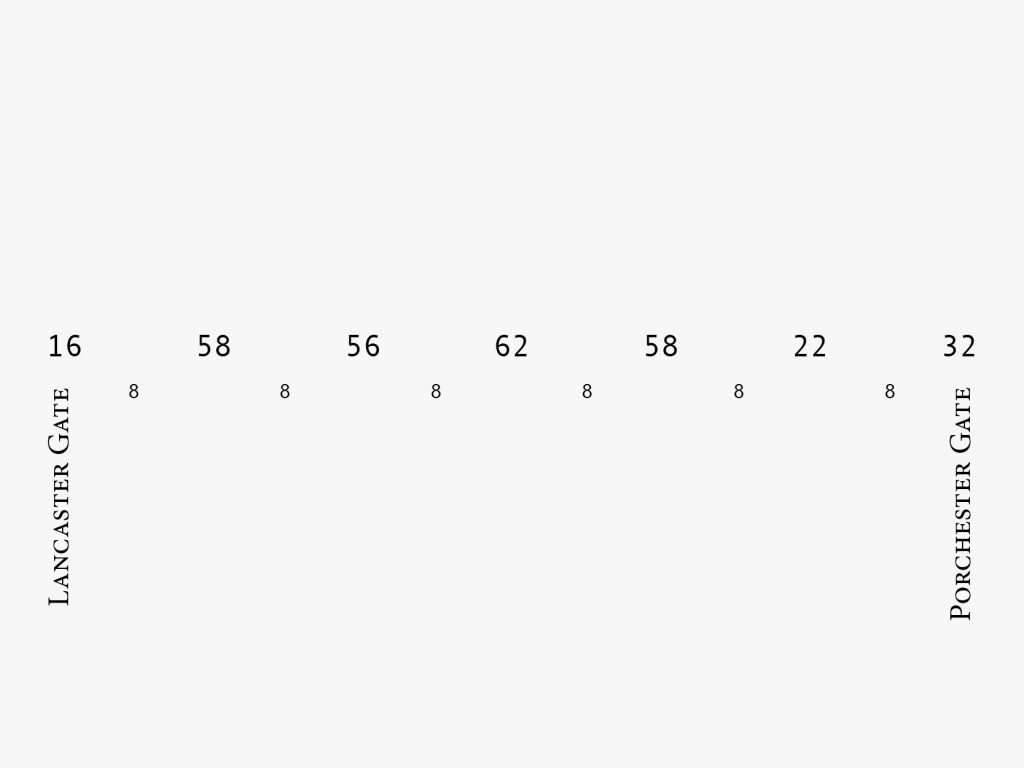
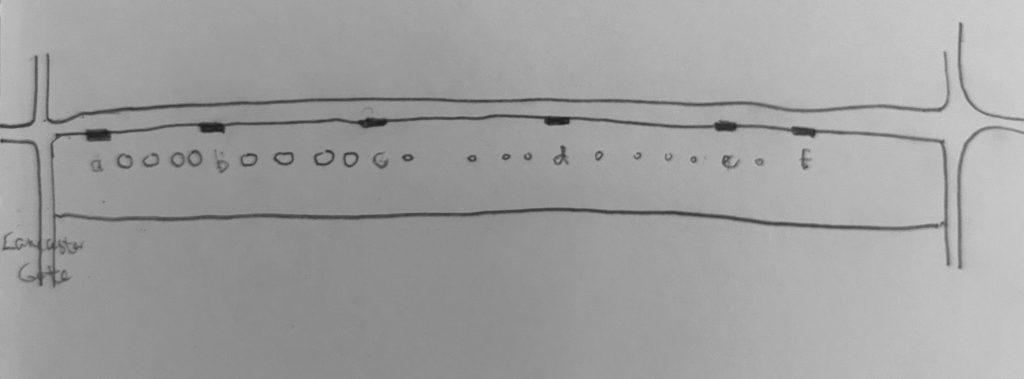
Along this path, there are six benches. I measured the distance between each bench and the gate by counting my steps, using these measurements to create an overhead map.
Then, I sat on each benches, naming A-F, two initial investigation methods were conducted: sound map and note-taking.
A
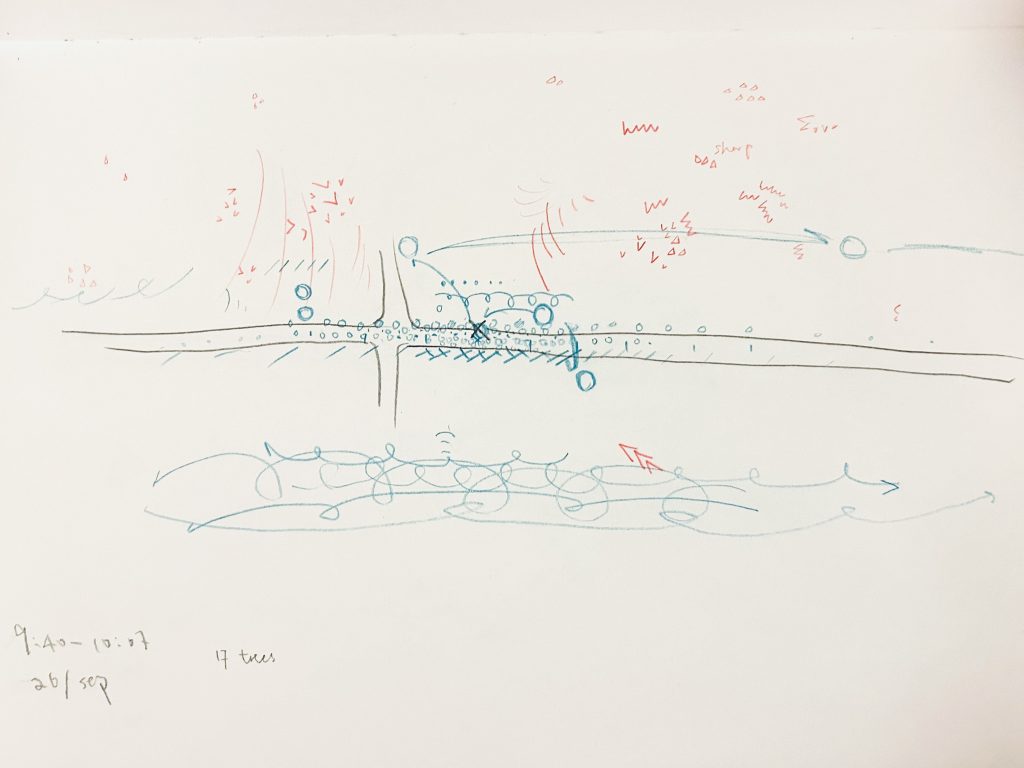
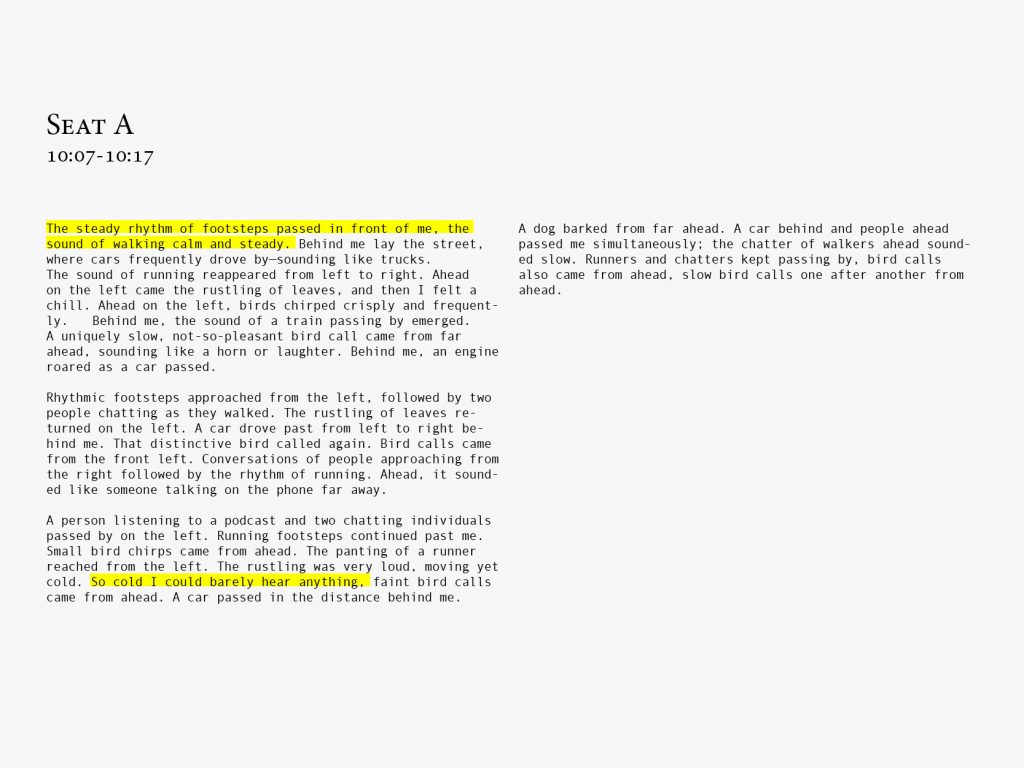
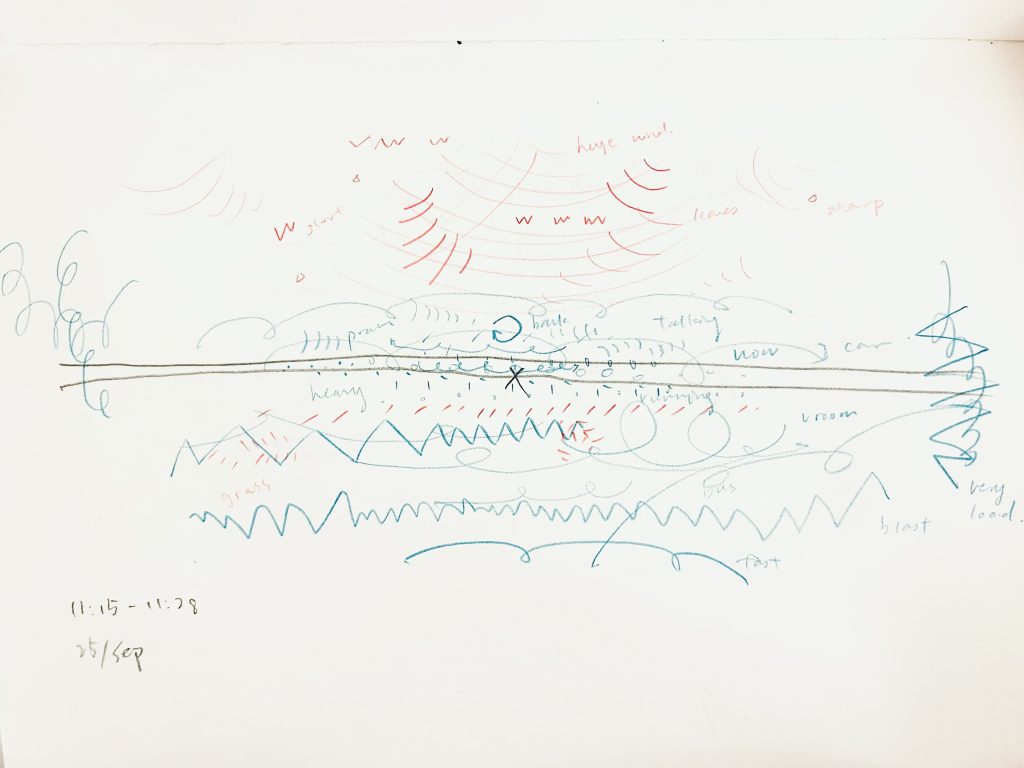
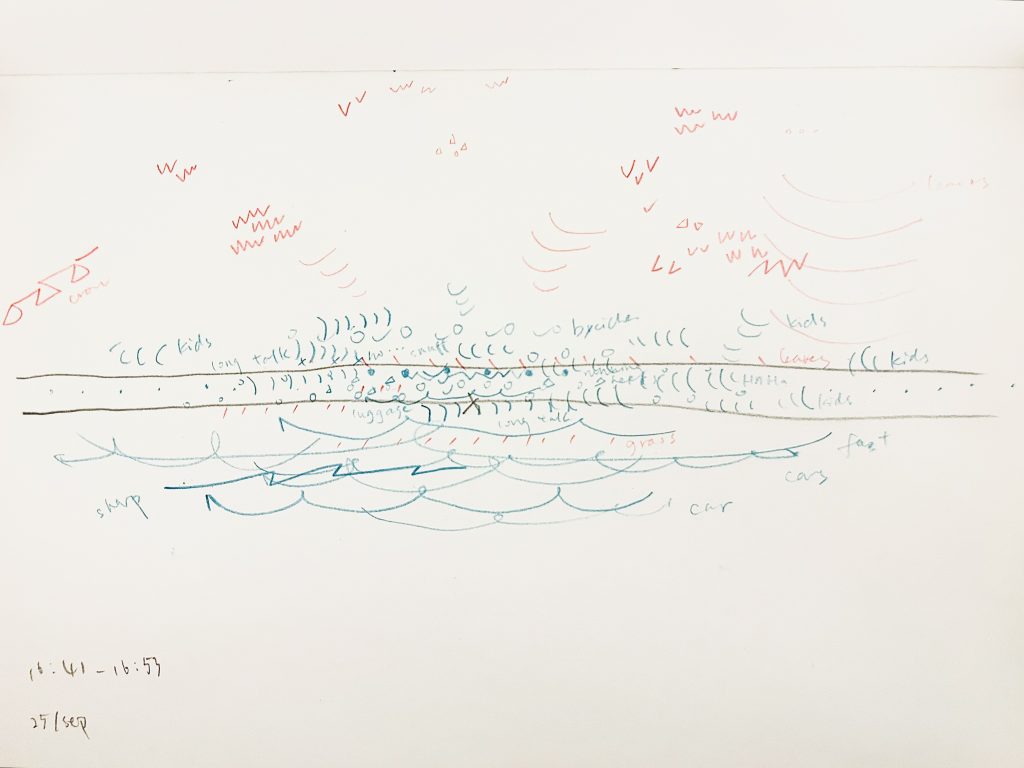
Driven by pure curiosity, I record any sound I can hear.
I centered myself and used hand-drawn graphics to rapidly document the types of sounds I could hear over a period of time. At the same time, I recorded natural sounds in red and unnatural sounds in blue.At first, I simply taking down all of the sounds that I can hear, for example, the steady rhythm of footsteps or the not-so-pleasant bird call.
B
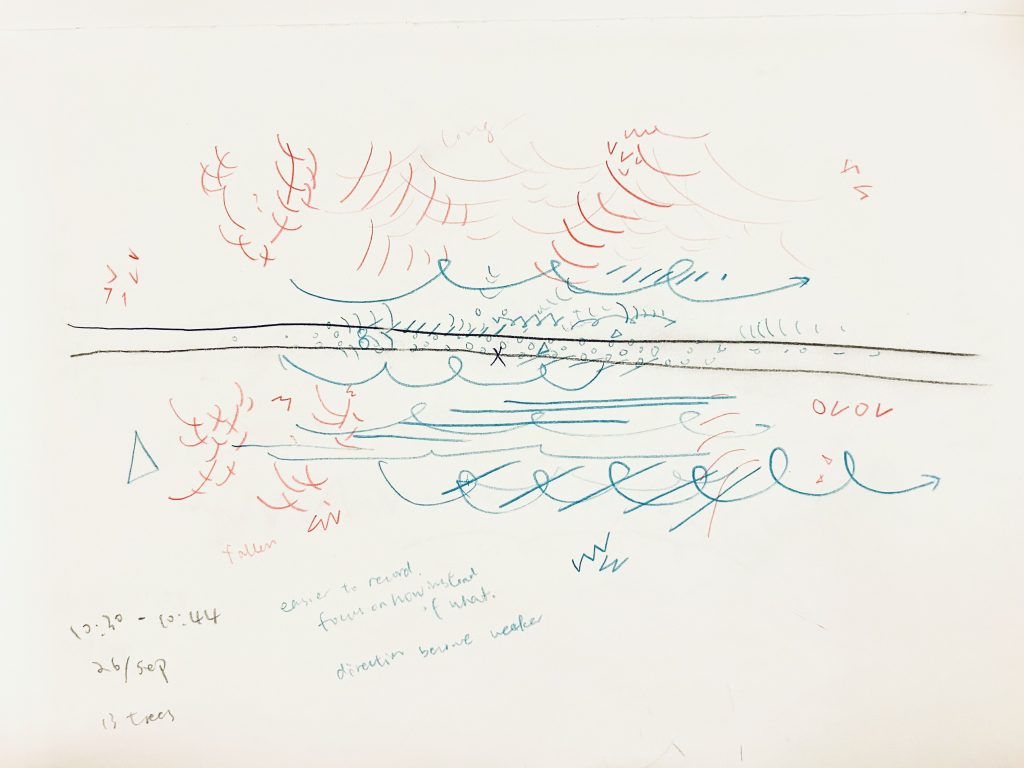
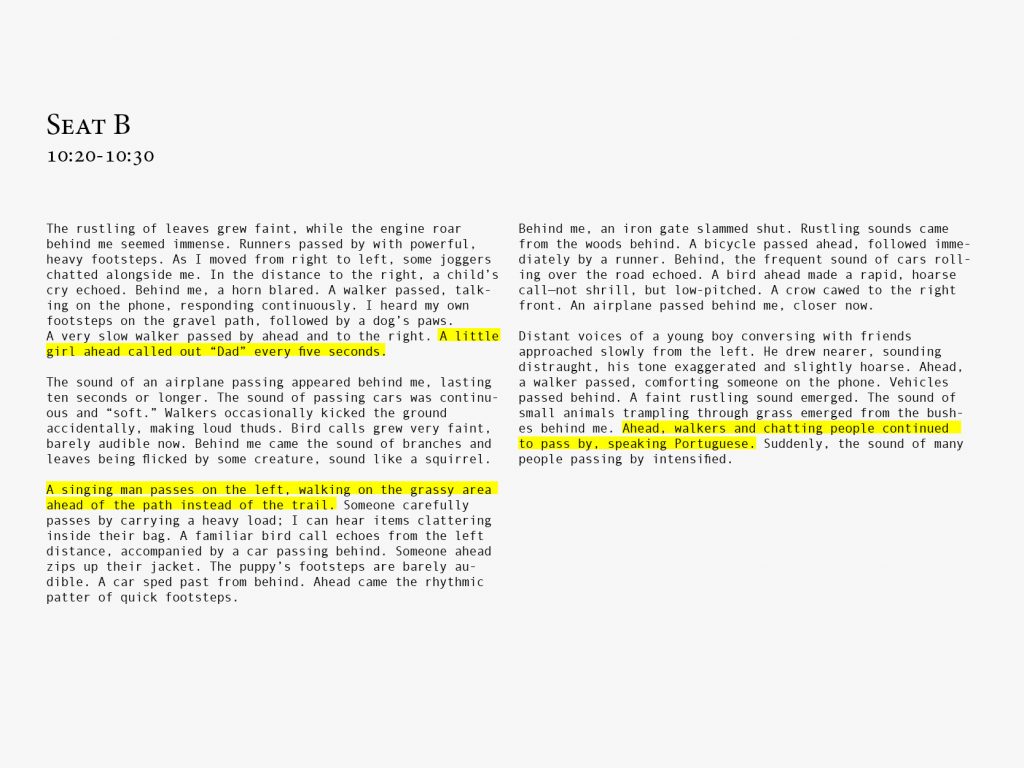
Perceive sound types and actively distinguish them through graphical means and note-taking.
The sound of leaves rustling in the wind is recorded as the waveform. Bird calls primarily follow a V-shaped pattern, with adjustments made for distinct vocalizations, for instance, the o v o v call is clearer than the v v v v call.As I took notes, my attention to sound gradually shifted from nature to human voices.
C
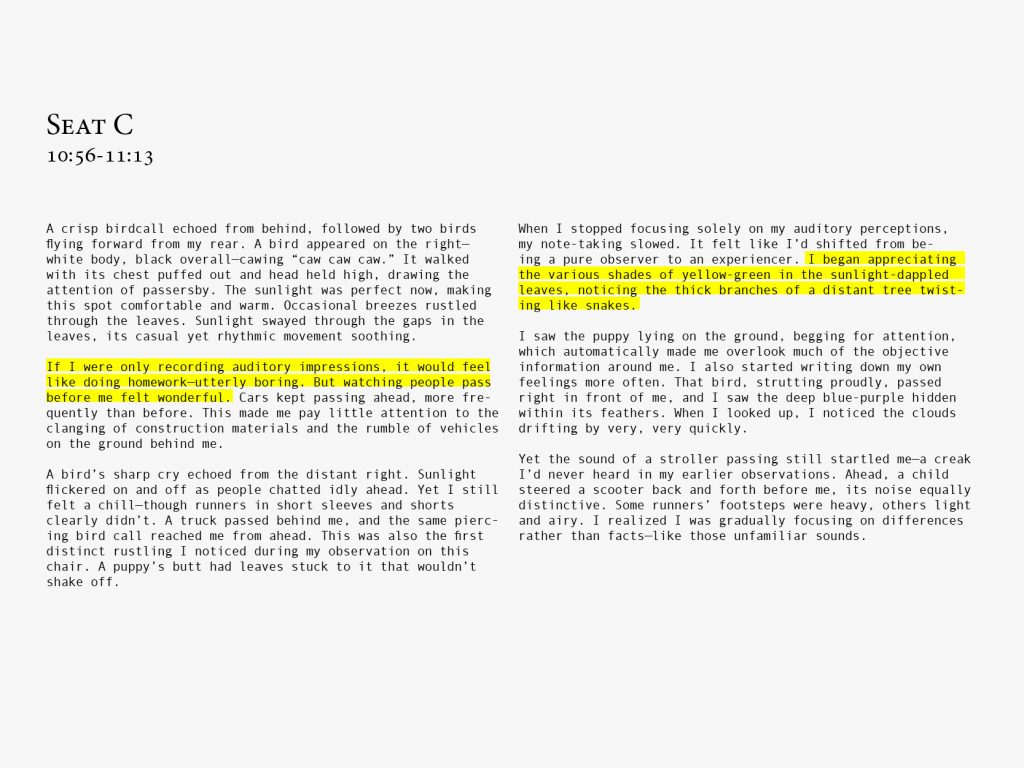
My attention began to transcend the sense of sound.
The sharp, raucous honking of cars made me record their sounds as wwww, while all wheel-related noises were captured as ➰➰➰➰.I began to record things beyond sound, the yellowish-green of leaves illuminated by sunlight, and branches twisting like snakes.
F
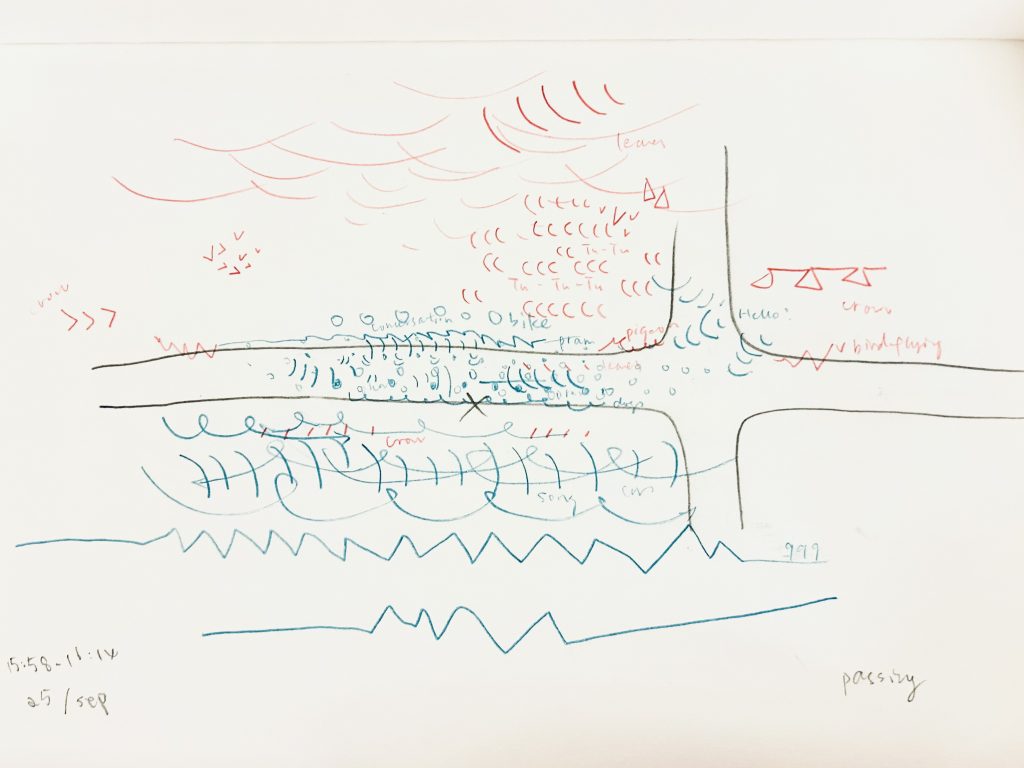
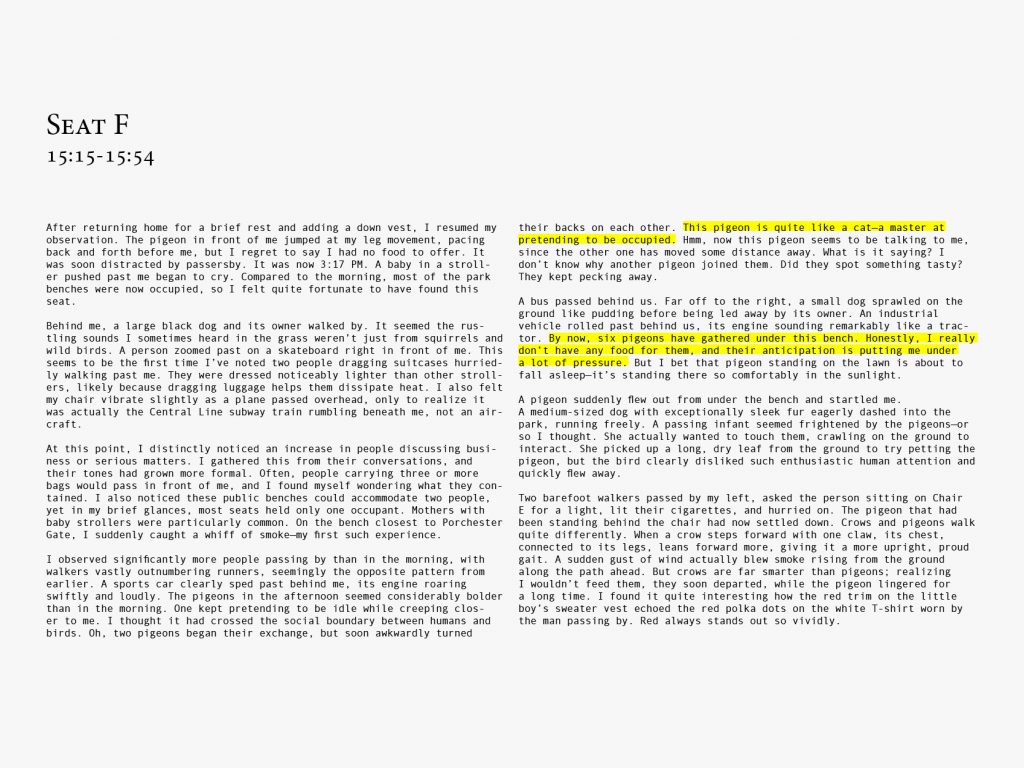
I noticed that my mood alters my attention to things.
The crow’s call was first transcribed by me as ▵–▵–▵–, owing to its long notes and brief intervals.My cheerful mood led me to notice the similarity between pigeons and cats: they both pretend to be busy.
D
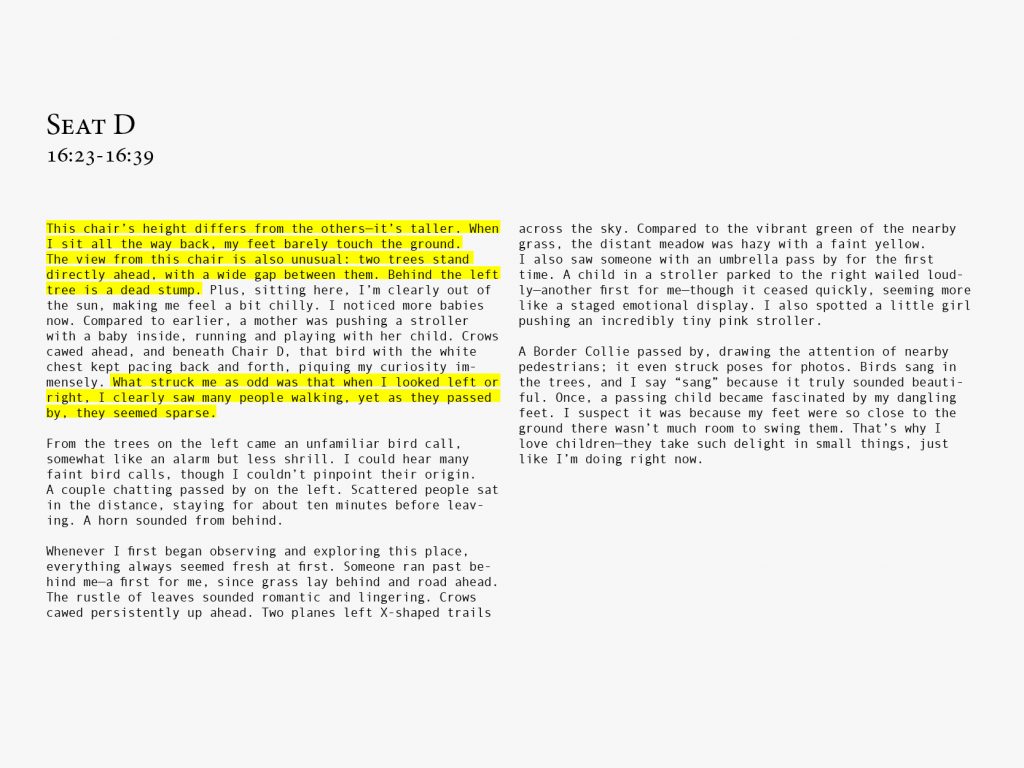
A more refined notation system.
I used ●●●● to denote the rapid footsteps of running and ○○○○ for the leisurely pace of strolling. For the first time, I began annotating the origins of these symbols beside them, to better understand my own intuitive notations.I notice how the height of the bench affected my observation, subtly altering my field of vision and posture.
E
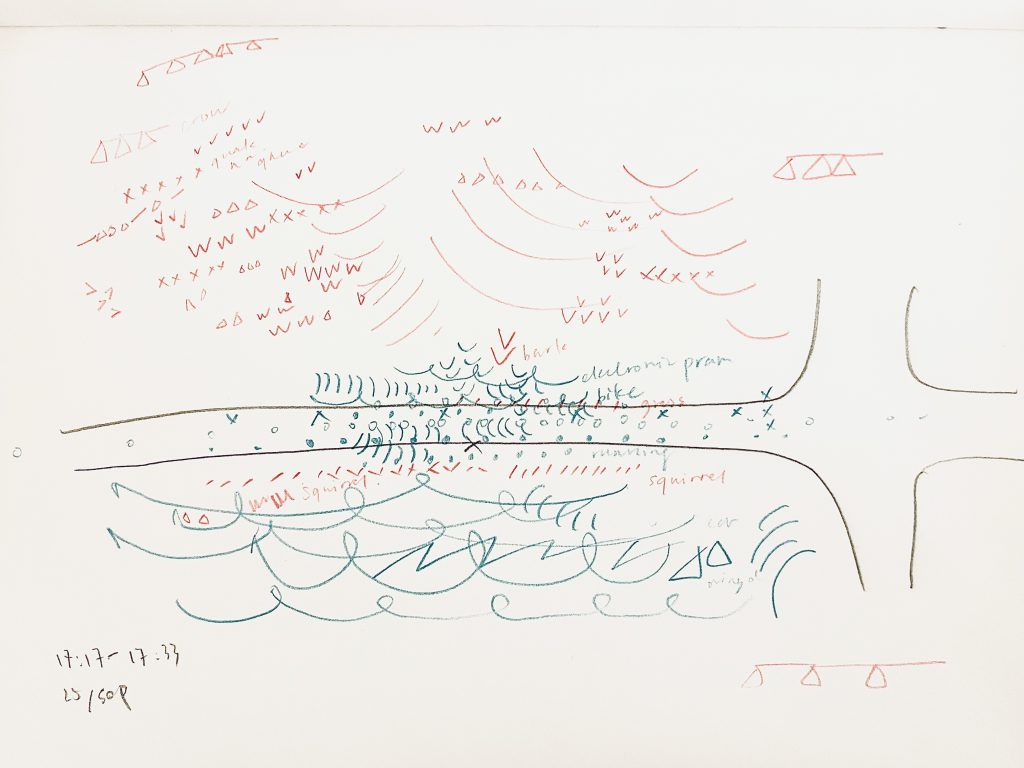
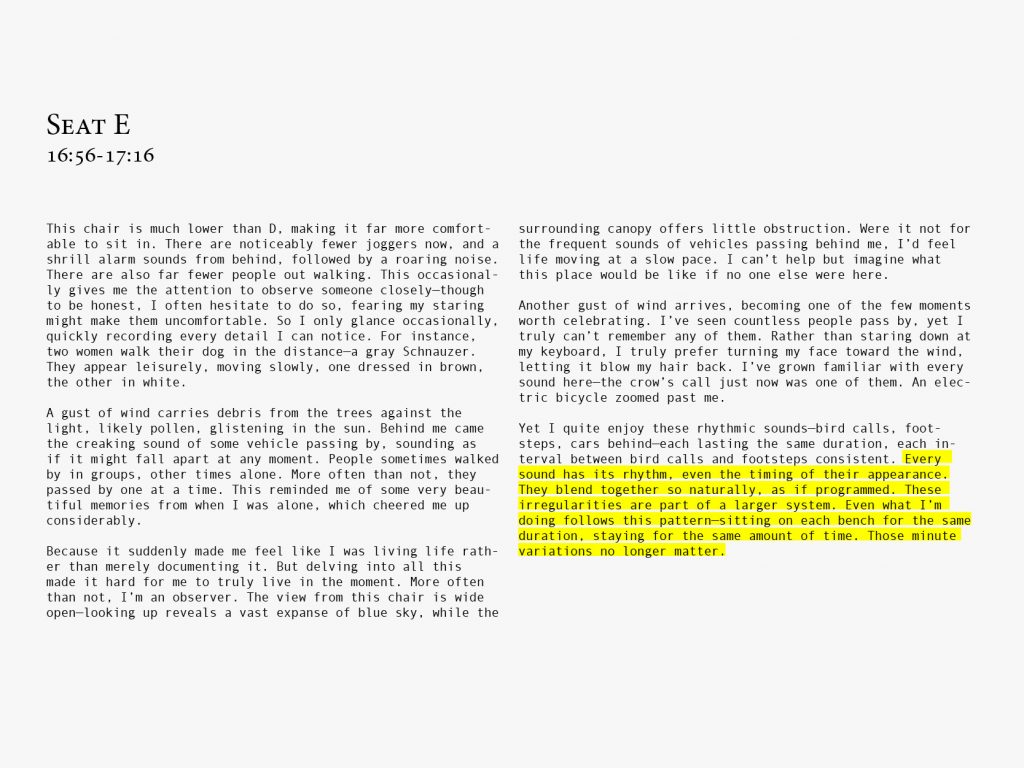
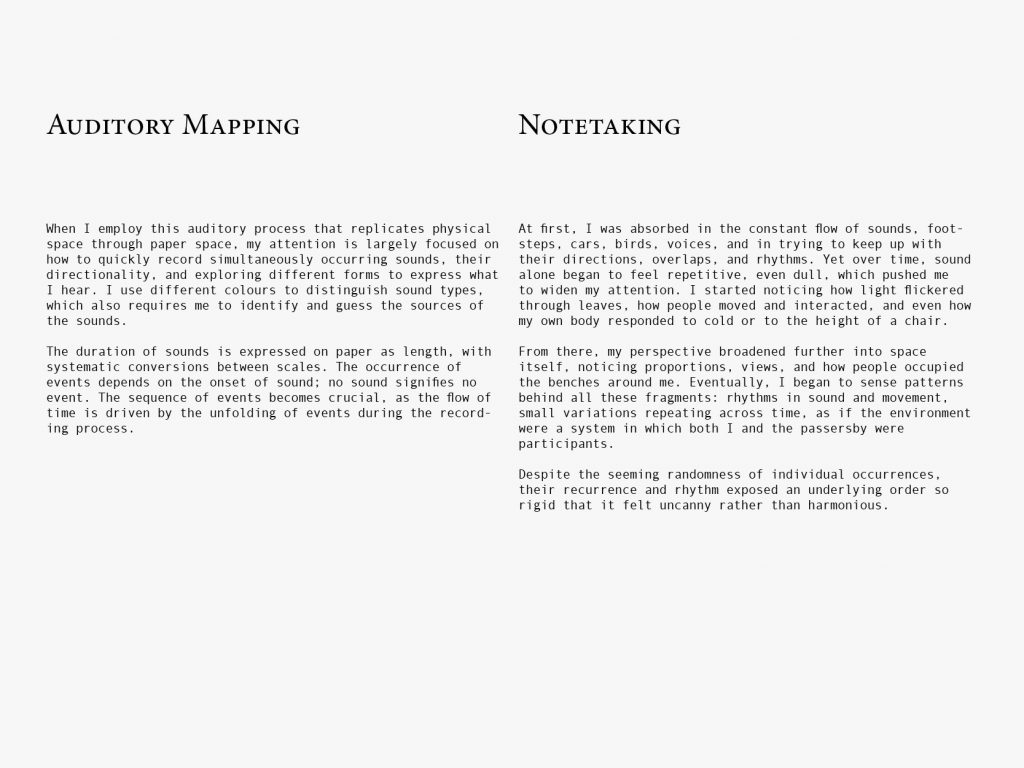
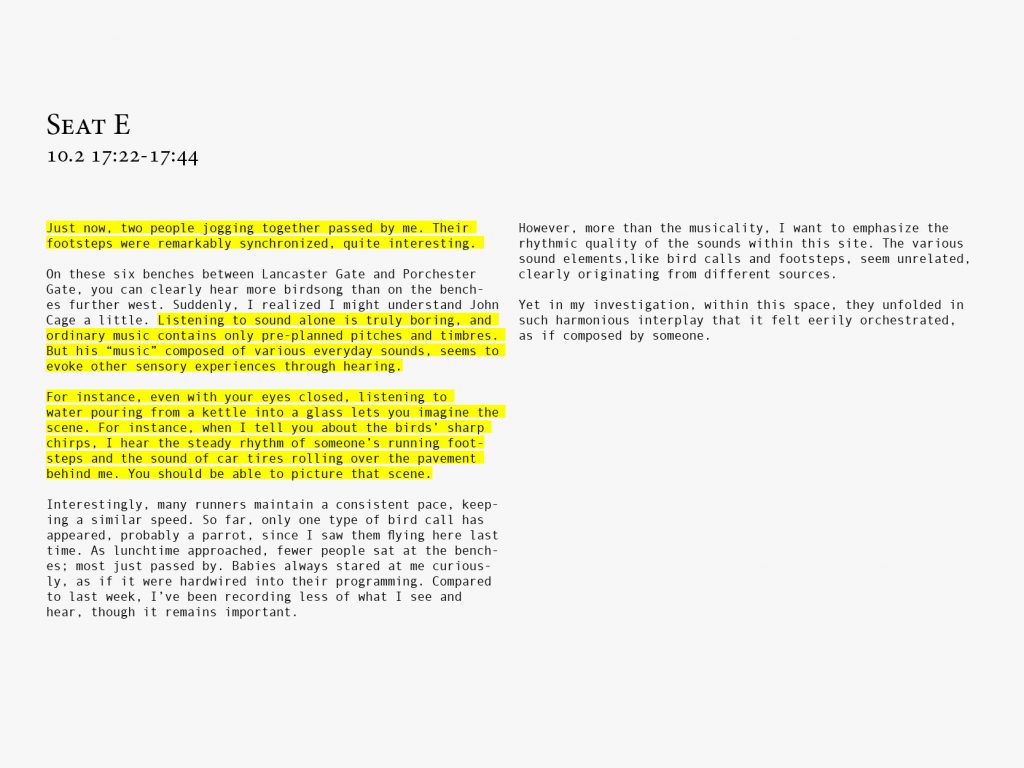
The rhythmic quality of the sound is particularly noticeable upon my investigation.
The bird call notation system has been updated as follows: Initial v v v v, clearer and fuller o v o v, crow’s ▵–▵–▵–, magpie’s x x x x, and sharper w w w w.Despite the seeming randomness of individual occurrences, their recurrence and rhythm exposed an underlying order so rigid that it felt uncanny rather than harmonious. Conclusions on my 2 investigation methods.
Feedback
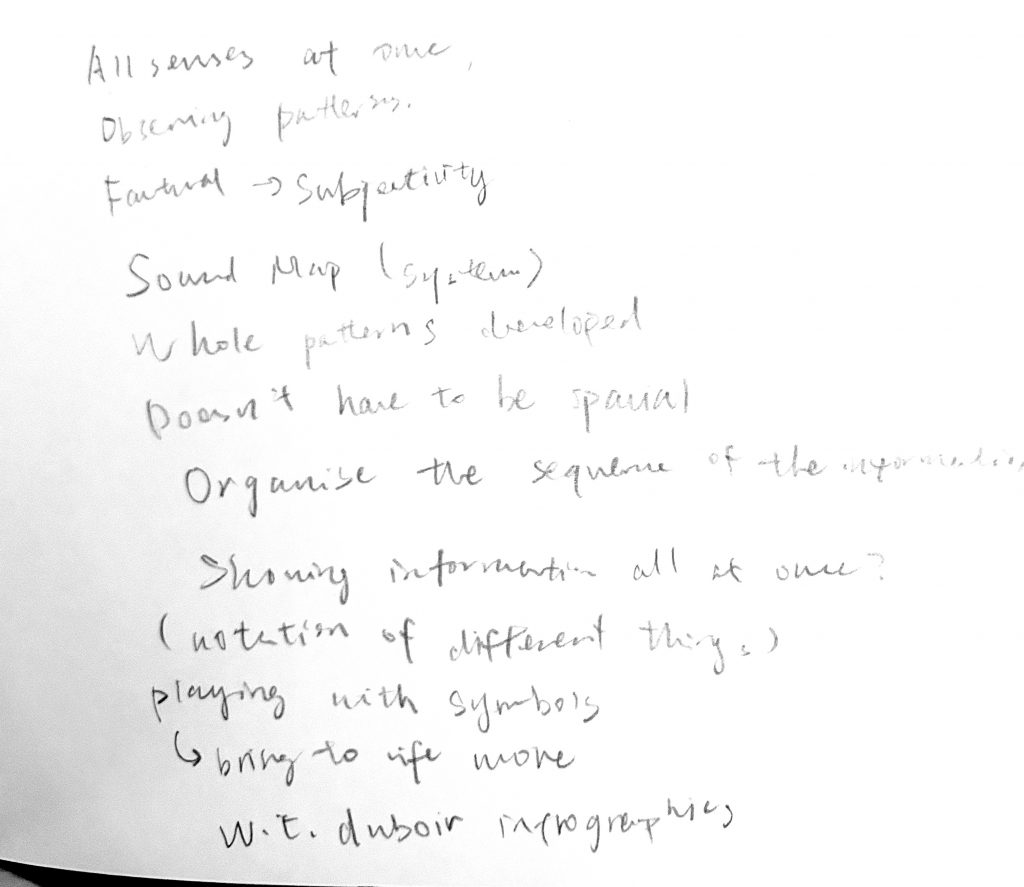
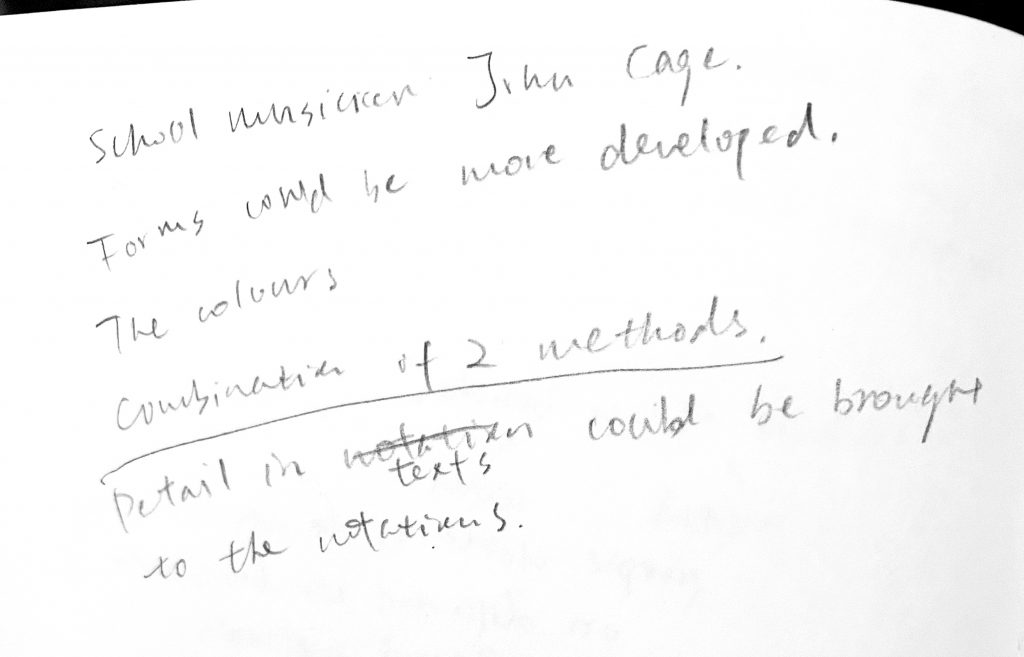
I do feel that the spatiality in the sound map are not the most crucial element. I concur with this suggestion and put it into practice the following week.I also agree that I should combine both investigation methods: the visual form of the sound map with the contemplative note-taking.
Week 2 26/9-3/10
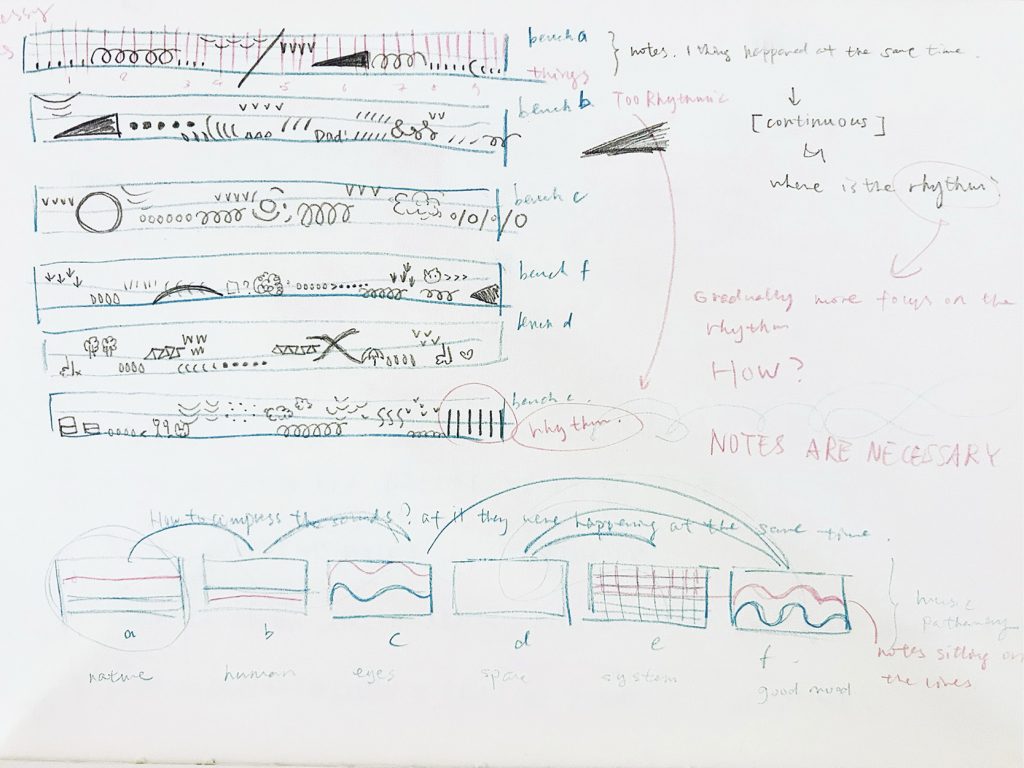
I want to express the regularity of the rhythmic patterns within this cite through rhythmic stave, which could be considered as an upgrade of the sound map that abandoned its spaciality.
Through note-taking, I have once again summarised the limited types of sound present within this site, and aim to express them through rhythmic notation: footsteps, birdsong, rustling leaves, the sound of wheels, horns, conversation, the crunch of grass, and aircraft noise.
Storytelling rhythmic stave with more notations
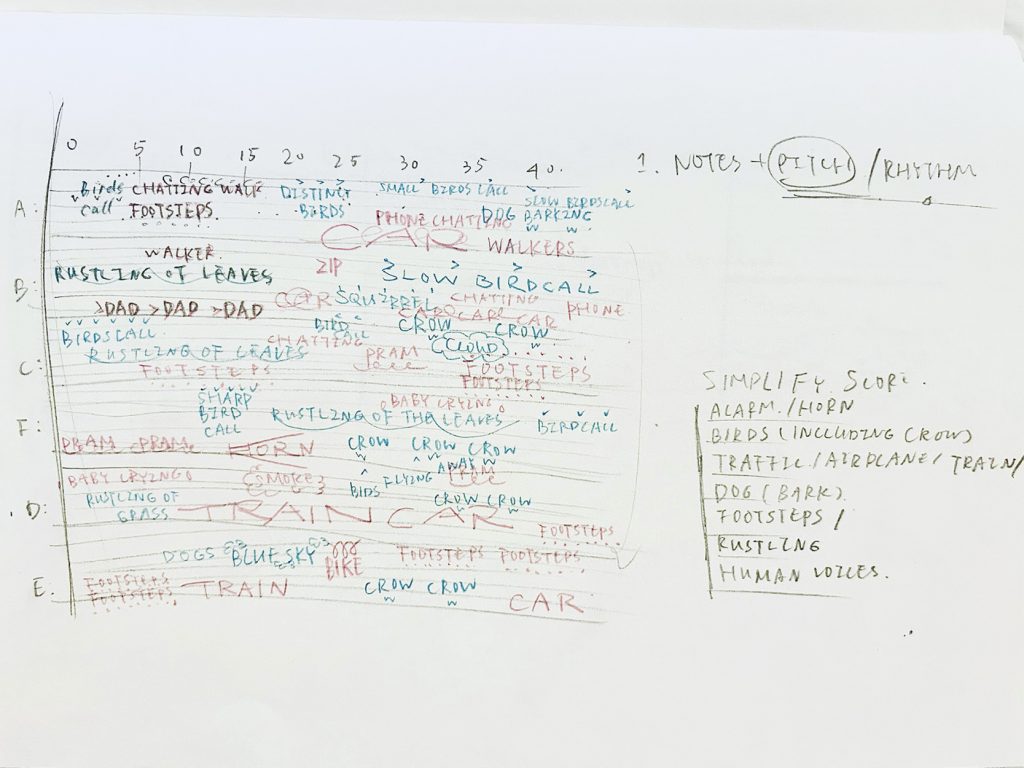
The horizontal axis of the chart represents time, while the vertical axis represents pitch. I employed more specific, narrative-driven notations to convey my findings. For instance, when mentioning pigeons, I drew bird claws; when describing an infant’s cry, I depicted teardrops.
Storytelling rhythmic stave with typography
I placed the experiences from the six benches along the same time vector, abstracting the benches into the vertical axis. I no longer attempted to use graphic symbols but instead employed pure typography to narrate the events unfolding at this site.
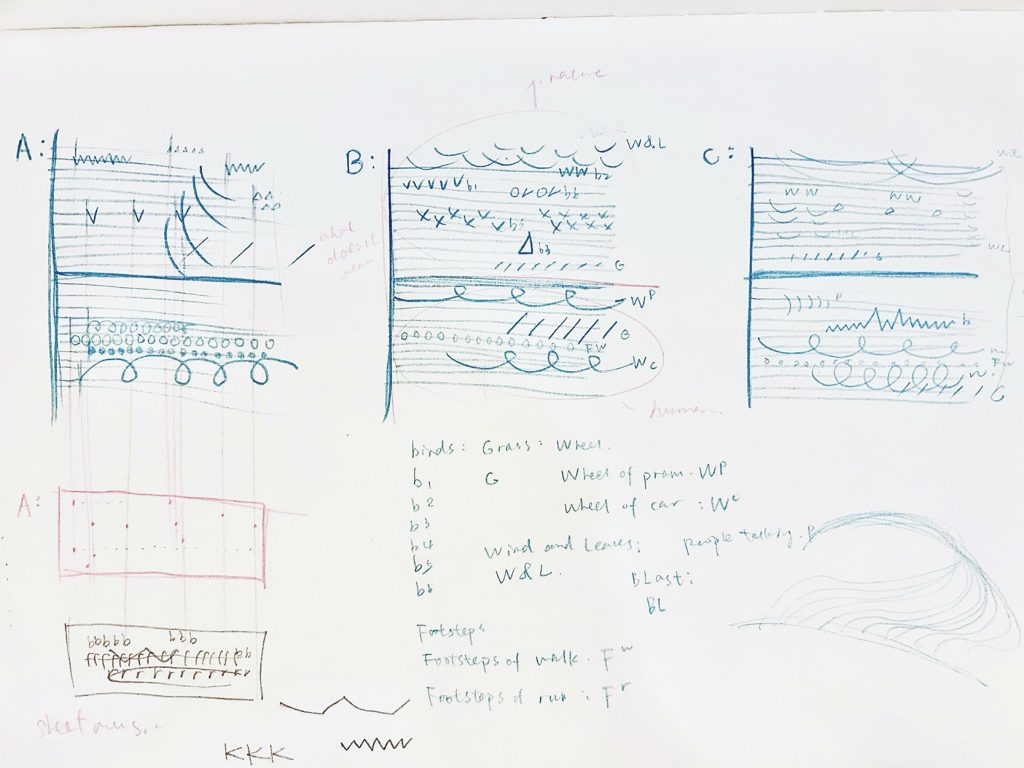
Rhythmic stave with simplified notations
I placed the natural and unnatural sounds in the upper and lower sections of the stave respectively, as I found that natural sounds often have a higher pitch than unnatural ones. At the same time, I began to emphasize the use of position, space between symbols to express the rhythm of each sound type.
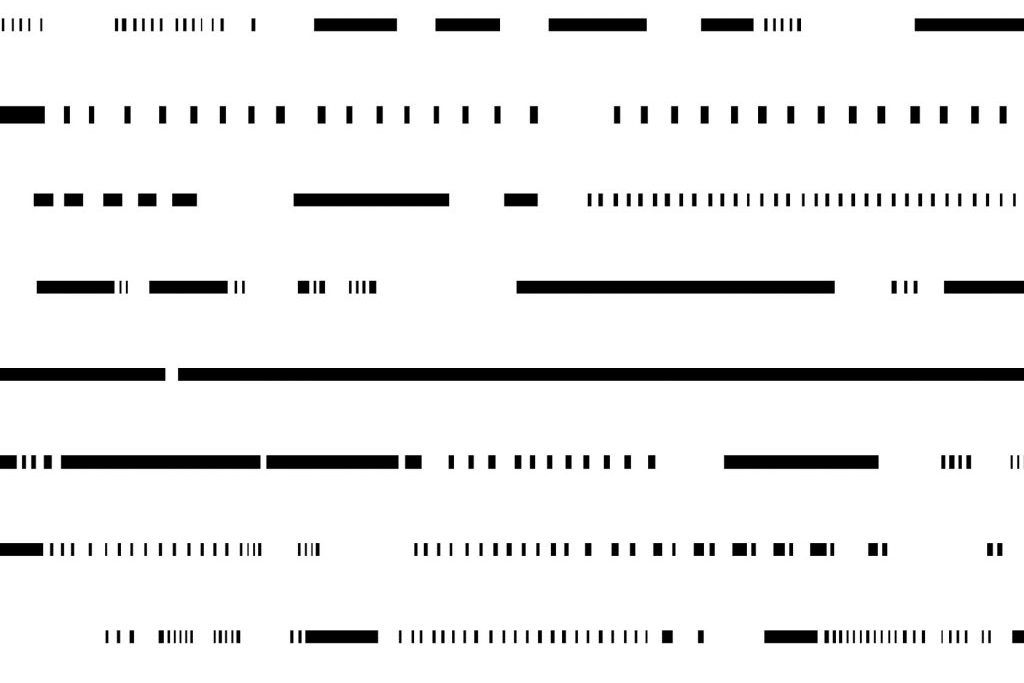
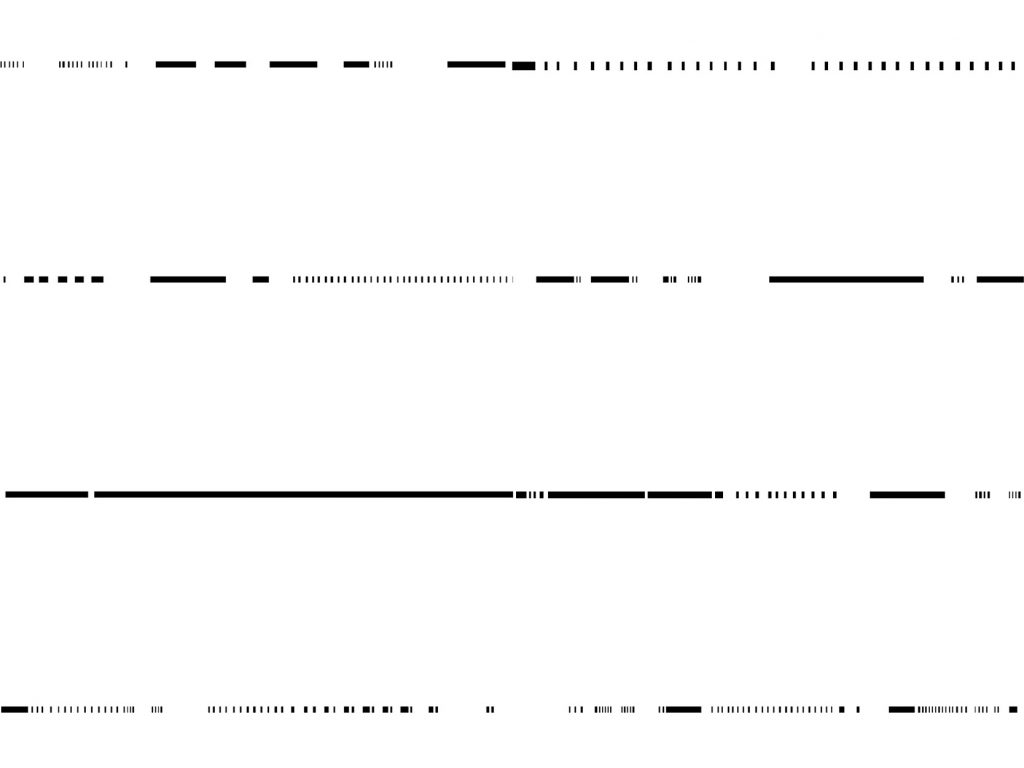
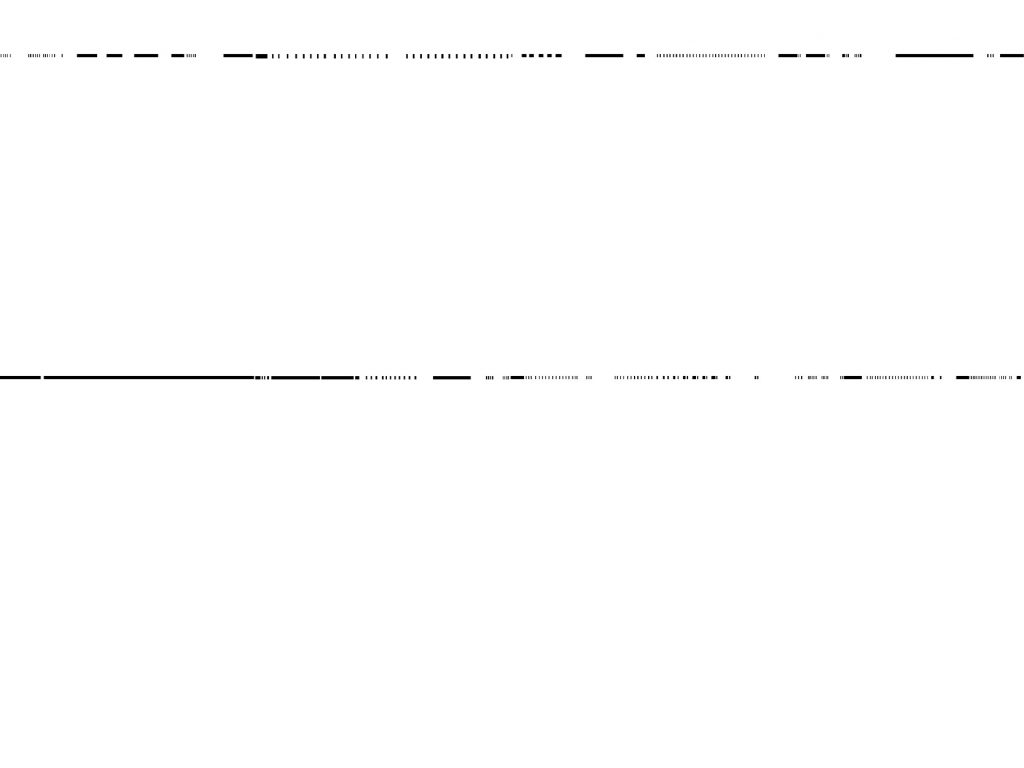
Rhythm recorded with spacebar
I wrote a simple programme that allows me to press the spacebar when I hear a sound, thereby generating a black bar. By employing a layout that compresses the black bars, I demonstrate how the greater the temporal scale, the more I disregard minute sounds, instead focusing on the rhythmic patterns of larger systems.
Feedback
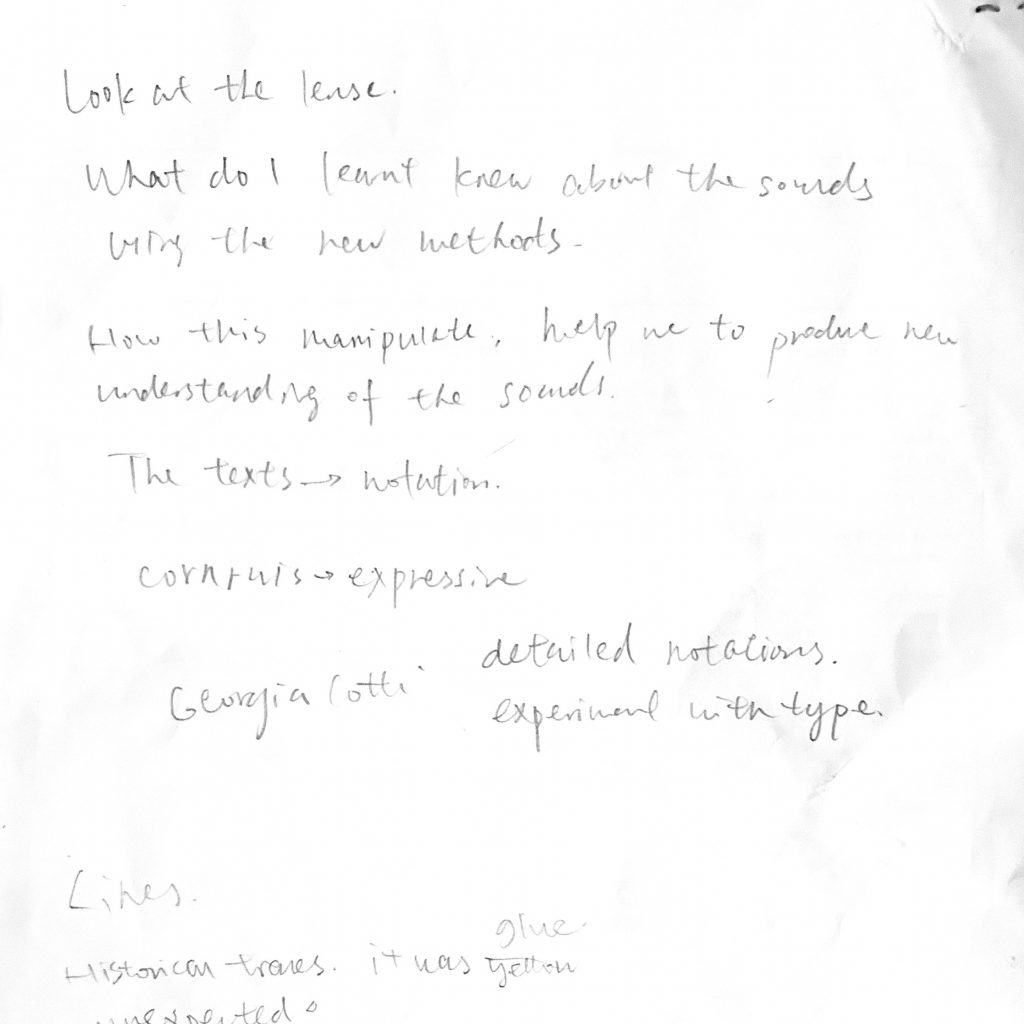
Based on the feedback, although I conducted numerous visual experiments, it appears I failed to clearly articulate during the presentation what new insights I gained through these visualisations.
Week 3 3/10-10/10
I want to summarise and articulate the critical findings I have gained over these three weeks in a clearer visual format, the digital archivehttps://lgtopg.cargo.site(please view in chrome), thereby establishing a coherent knowledge framework.
Following three weeks of investigation, the critical findings I have gathered can be summarised in three points:
The sound map from the first week recorded less the types of sounds and more the limits of my own perception, for I could only document one thing at a time. Yet as pedestrians passed me, leaves were also falling.
The spatial rhythm of the bench placement coincidentally resonated with the site’s sonic cadence. The sound rhythm near the gate, predominantly derived from the street, felt more compact. This coincided with the benches near the gate being arranged in a tighter formation.
Sound enabled me to perceive events unfolding behind me, revealing numerous surprises beyond my field of vision.
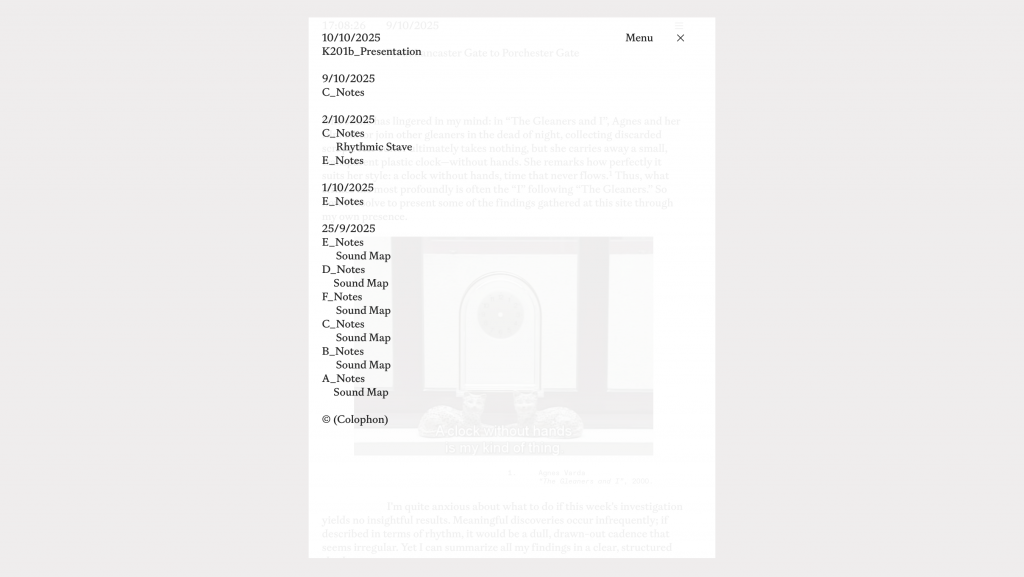
To better demonstrate how I uncovered these intriguing critical insights through the investigation process, I made hyperlinks for each investigation method mentioned on the summary.
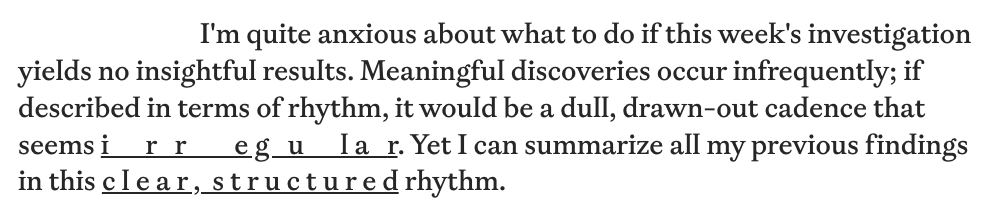
At the same time, I devised some typographical effects to more vividly convey the literal meaning of the text.
The contents are arranged chronologically, documenting my investigative process.
Hi, this is a comment.
To get started with moderating, editing, and deleting comments, please visit the Comments screen in the dashboard.
Commenter avatars come from Gravatar.






Leave a Reply to A WordPress Commenter Cancel reply